
Community Spotlight: SASH Wellness Nurses
January 8, 2026
PartnersFor this dedicated team, care coordination is key to improving community health.
Support and Services at Home (SASH®) is a nationally recognized, team-based program of care coordination shown to improve population health, reduce Medicare spending, and help people stay healthy and independent in their homes. Operating from more than 200 affordable-housing communities across Vermont, SASH partners with over 70 organizations to provide comprehensive, no-cost support to more than 13,000 older Vermonters and people with diverse needs since 2011.
SASH is a cornerstone of Vermont’s broader effort to transform health care by investing in wellness and addressing the social determinants of health — especially housing. Since the program’s launch, Vermont communities have seen increases in controlled hypertension, more participants with advance directives, and decreases in both falls and emergency-room use.
A model centered on prevention and empowerment
SASH Wellness Nurse Michelle Downing oversees the wellness of just over 300 participants in three counties. Her work focuses on prevention, education, and supporting people to live independently.
“I love my work because it’s really preventive nursing,” Michelle said. “There’s a lot of teaching and self-empowerment. We try to keep people home and safe and help them take control of their health, something they might not have time for in a doctor’s office.”
While Michelle is in participants’ homes and at SASH housing sites, Remote Wellness Nurse Donna Tatum conducts assessments virtually, typically when covering a nurse vacancy, to ensure that participants have continued care.
“I do participant wellness assessments online,” Donna explained. “They’re a lot like having a conversation – ‘Tell me how’s your diet?’ Sometimes that’s when I learn they don’t have enough food, and I can support them with that.”
Through these visits and assessments, SASH nurses gather information on participants’ physicians, dental care, vaccines, medications, and daily needs. They then address questions; flag concerns for participants’ care teams; and offer education on chronic illness management, smoking cessation, sleep, mental wellness, nutrition, and even bathing or mobility support.
SASH also provides cognitive testing, referrals, healthy-living plans, and blood-pressure and weight-management clinics. Offering both in-person and remote options ensures flexibility and helps the team meet participants exactly where they are.
A vital tool for safe, coordinated care
One of the most important aspects of SASH’s work is care coordination during and after hospital stays. Here, VITL, Vermont’s nonprofit health data sharing network, is crucial.
Through VITL, SASH nurses can access necessary up-to-date information on blood pressure, diabetes measures, medication changes, diagnoses, treatment plans, and hospital discharge notes.
Nurses also receive notifications when SASH coordinators enroll new participants, allowing them to immediately review medical histories before a visit.
According to Michelle, “If a participant is discharged from a hospital but the coordinator isn’t sure where, I can go into VITL and see they’re at a certain nursing home and send that information over. Before I visit someone, I can see new diagnoses, allergies, immunizations, medication lists, and lab results. It’s incredibly helpful, especially if participants may not remember all their medications or vaccine history.”
Medication reconciliation is one of the biggest challenges, and VITL fills a critical gap.
“If I can’t get a doctor’s office on the phone, I can check VITL and see an updated medication list. That’s a big help,” said Michelle.
This level of transparency can help reduce hospitalizations, prevent harmful drug interactions, and help ensure each participant’s record in SASH’s system is up to date.
“I’d have a hard time doing my job without VITL,” Michelle added. “It feels like somebody has my back.”
Preventing readmissions and keeping Vermonters safe
Reducing costly hospital readmissions is a major focus of SASH’s work. With VITL, nurses can review discharge plans and walk participants through instructions at home, when they’re comfortable, less anxious, and better able to absorb the next steps for follow-up care.
“If you’ve ever been in the hospital, you just want to go home, and it’s hard to remember all of the details,” Michelle said. If instructions aren’t clear, coordinators and nurses work together to call participants to review plans, answer questions, and confirm accuracy through VITL.
For example, through VITL, a SASH wellness nurse noted that a participant had been seen in the emergency room for contusion following a fall and head impact. The nurse could see that the participant was on a blood thinner and was able to quickly follow up with both the participant and her doctor to ensure proper preventive care — potentially avoiding a second ER visit.
Having quick access to this information allowed SASH to intervene early and avoid potentially serious complications.
More than care: connection, dignity, independence
For Michelle and Donna, every day is different. Some participants need check-ins only a few times a year; others, often the most medically vulnerable, require frequent support.
Yet beyond the medical tasks, both nurses say the human connection and understanding are what matter most. Loneliness is also a big contributor to poor health. While SASH coordinators conduct screenings to determine if participants are lonely or isolated, the screenings data in VITL (which VITL is planning to incorporate more of over time) also prove to be helpful starting points for the SASH nurses to identify who may be isolated so they can reach out proactively.
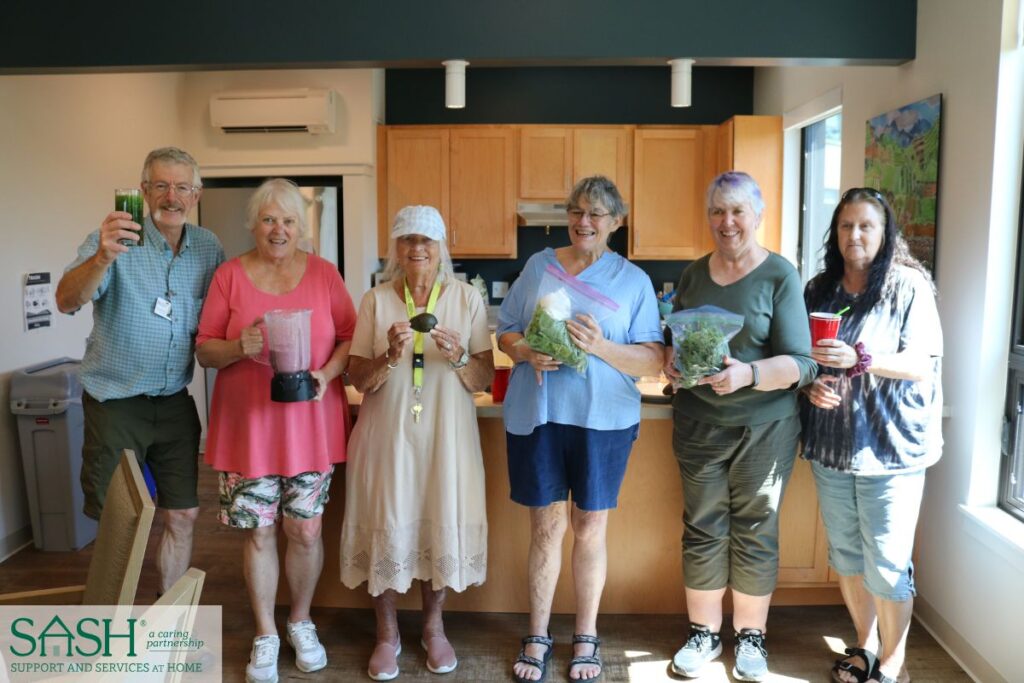
Michelle shared, “It’s nice to be able to call a participant and say, ‘how are you doing today?’ And they appreciate that connection.”
“Someone might be having a bad day, but not a bad life,” said Donna. “Through conversation, you can redirect them, help them focus on something positive. People get stuck in ruts, and sometimes one reminder of something good makes all the difference.”
Empowering participants to stay independent is central to SASH’s mission.
“We can truly help people with our resources, check-ins, and transition support,” Donna said. “If they need help understanding medications or a diagnosis, we’re there. Knowledge is power — we can help them self-manage and stay home if that’s what they want.”
To learn more about the important work SASH is doing in Vermont, please visit www.sashvt.org.